
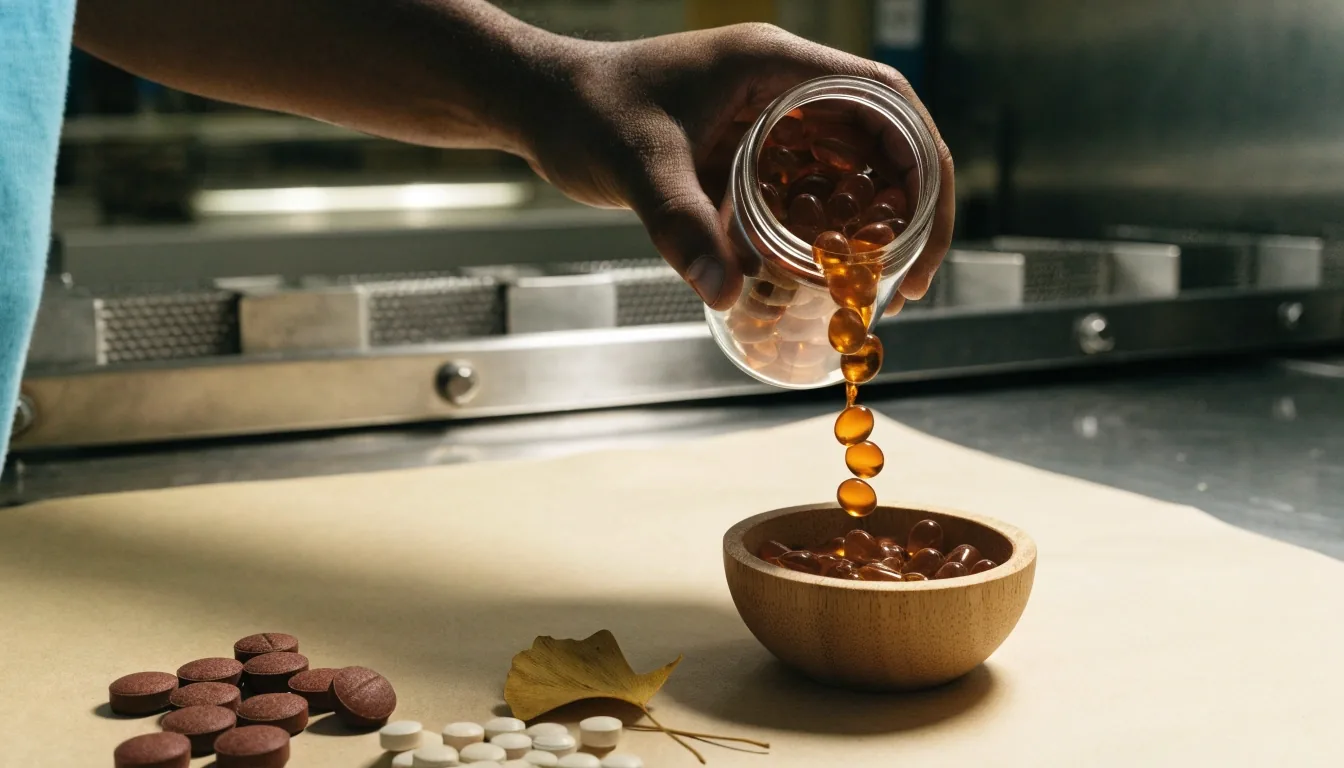
Supplement catalogue and reading room, Palembang
Natural supplements for men in Indonesia
Formula by formula: what goes into a men's vitamin, how herbal capsules differ, and how to match either one to the way you actually live your week.

Start with your daily routine, not the label hype
The most useful question before buying any men's supplement is simple: when will you actually take it? A man who works shifts in Palembang and eats lunch from a warung has a different week from someone who trains five mornings a week and already tracks protein.
HerbalPria is a catalogue and reading resource for men in Indonesia who want to understand what goes into a daily supplement before they buy one. We cover men's multivitamins, mineral blends, herbal capsules and plant-based whole-food formulas sold in the local market, and we explain the ingredients panel by panel. You will not find promises here about overnight changes. What you will find is plain information about common ingredients such as zinc, magnesium, saw palmetto, ginkgo biloba and resveratrol, and how different formula styles suit different routines.
Daily multivitamins suit people who want one capsule with breakfast and nothing more to remember. Herbal capsules suit men who prefer a botanical-focused formula and are willing to take it consistently for weeks before judging it. Neither style is better in the abstract. The match between formula and routine is what matters, and that is the comparison we help you make.
The four formula styles you will see in Indonesia
Men's supplements in this market generally fall into four groups, and knowing them makes shopping faster. Most confusion at the shelf comes from mixing these groups up. A botanical capsule is not a substitute for a multivitamin, and a multivitamin is not built around herbal extracts.

A wide vitamin and mineral panel, often sold in pharmacies such as Guardian. Suits a single capsule at breakfast and no further tracking.
See men's multivitamin formulas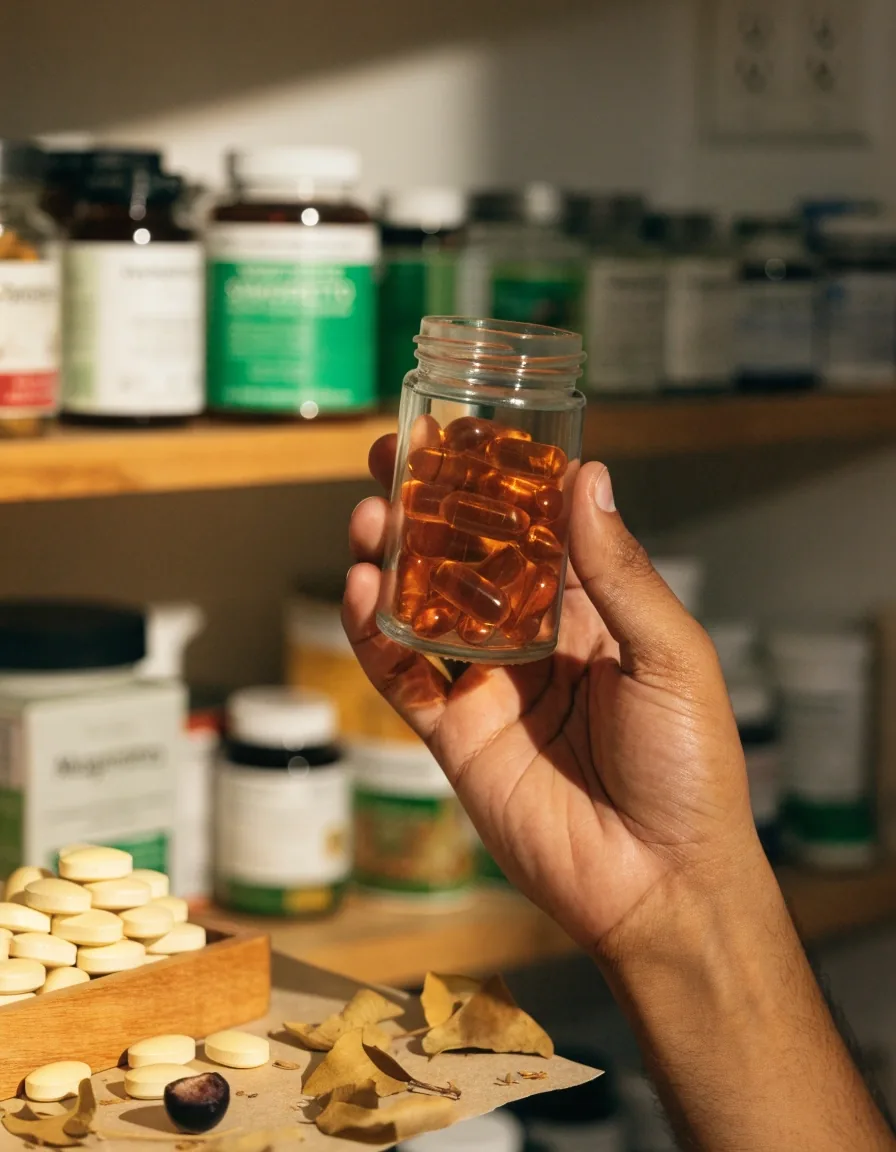
Nutrient levels adjusted for that stage of life, shelved separately from general men's products so the target is obvious at a glance.
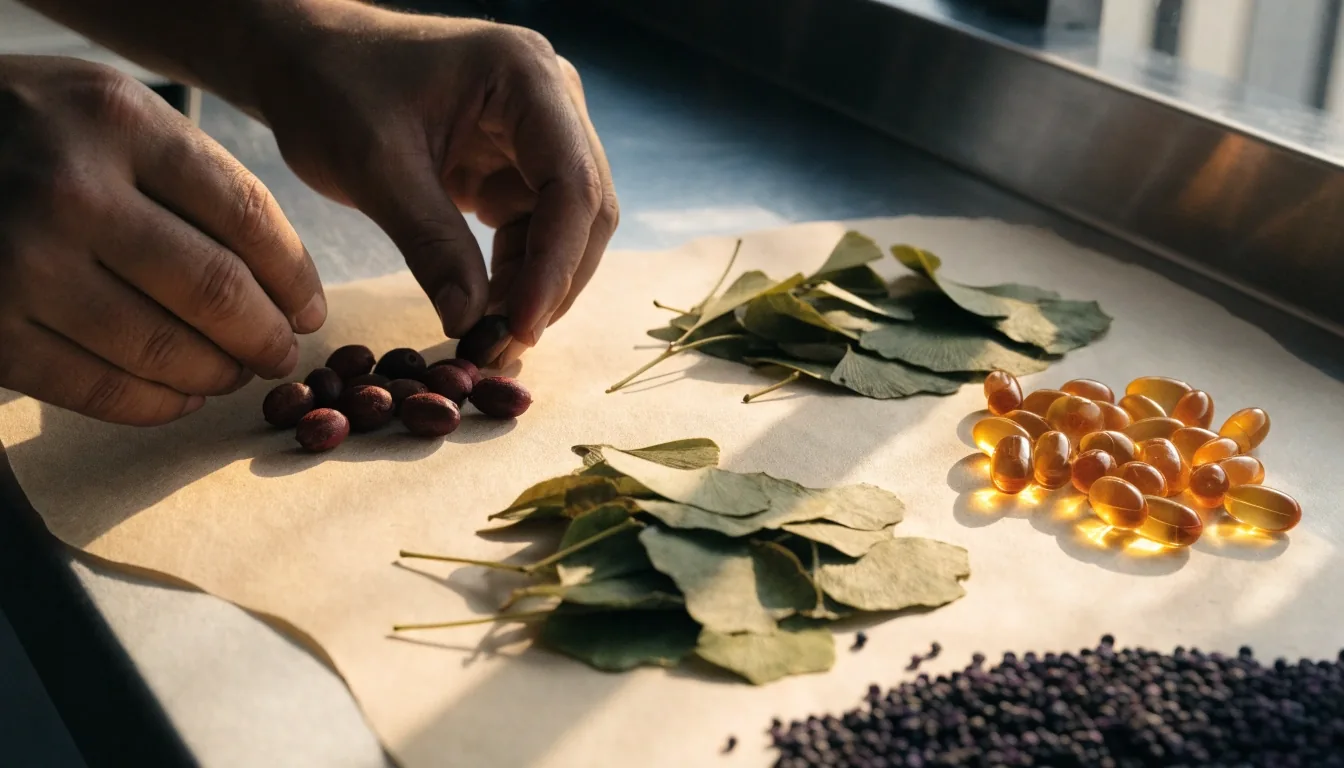
Plant extracts rather than a full vitamin panel — the style that rewards consistency over weeks instead of a quick read of the front label.
Read about herbal capsule ingredients
Nutrients delivered through food-based sources instead of isolated compounds, positioned at the premium end of the shelf. The trade-off is price and pack size, so the sensible first step is the smaller bottle.
Check the buying guide before you orderWhat zinc and magnesium actually do in a men's formula
Zinc and magnesium appear in so many formulas that they almost become shorthand. Zinc is included in men's vitamin supplements because it is one of the easiest minerals to explain: it contributes to normal immune function and is involved in many everyday processes in the body. Magnesium is grouped with energy and daily function in men's supplement positioning, and it shows up in mineral-rich multis far more often than in botanical-only capsules.
When you compare two multivitamins, check whether these two minerals are present and at what point in the panel they appear. That single check tells you whether you are looking at a complete formula or a partial one.

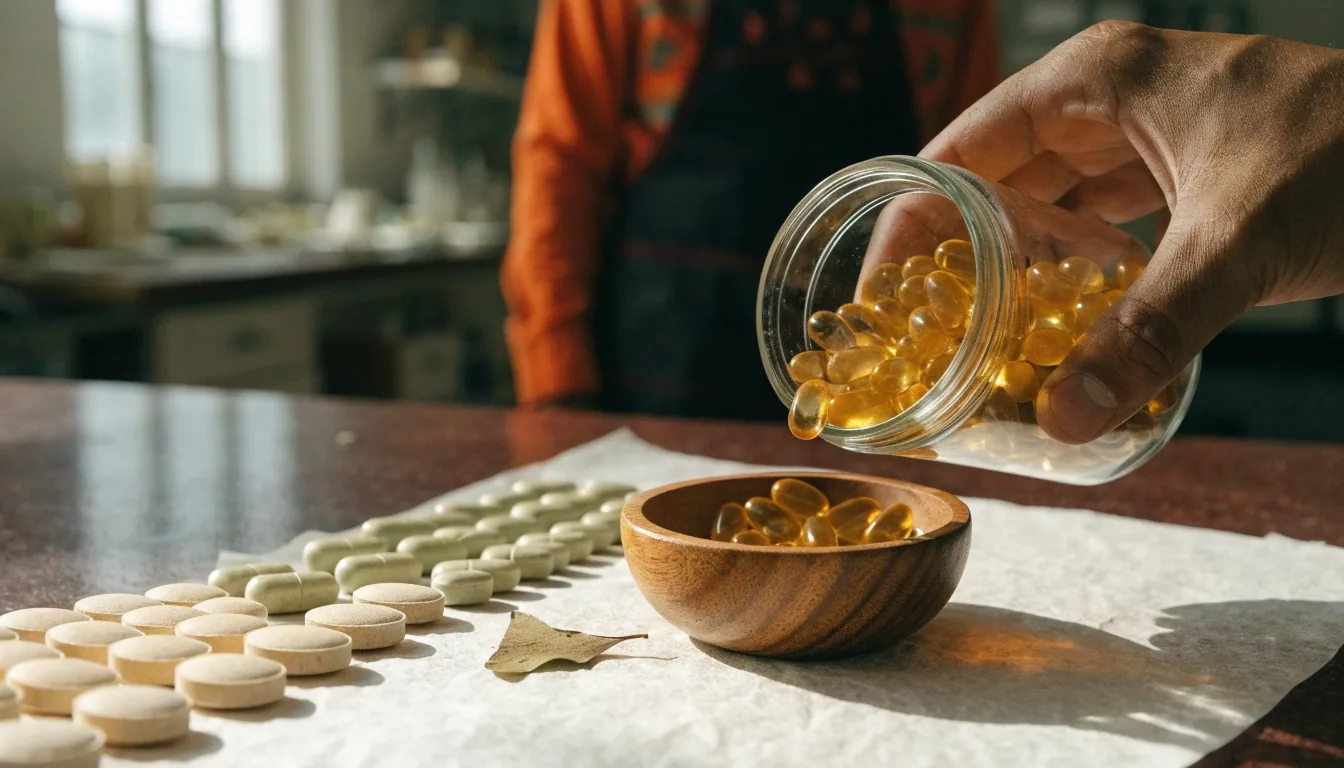

Botanical ingredients: saw palmetto, ginkgo and resveratrol
Herbal capsules carry a different kind of label. These three ingredients rarely stand alone — understanding that they usually travel in groups helps you read a botanical capsule without guessing.
Saw palmetto
Included in imported men's formulas usually as part of a botanical complex alongside antioxidant ingredients, rather than as a single-ingredient capsule.
Ginkgo biloba
Appears in blends that lean toward circulation and focus in their wording, and it shows up in broader supplement retail rather than only in men's products.
Resveratrol
Often listed as trans-resveratrol, it sits in a plant-compound cluster with grape seed extract and lycopene — the antioxidant-heavy style of premium men's supplements.
How to read a label before you buy
A label check takes about two minutes and saves a wasted purchase. If a label is vague about quantities, treat that as information too.
The rows on the right are the checks we run in the same order every time — it is the shortest path from a shelf full of bottles to one that fits how you eat and how often you remember a capsule.
- Registration status Confirm the product carries a BPOM registration number. The basic legitimacy signal here
- Panel order Check whether vitamins, minerals and botanicals are all listed, or only one group. Tells you the formula's centre of gravity
- Serving size Some formulas ask for two or three capsules daily, which changes how long a bottle lasts. Do the arithmetic before the shelf does
- Pack size Match it to how you actually take it, especially with premium whole-food products. 60, 120 and 240 all behave differently
- Vitamin and mineral content Look for what matches your diet gaps, not just the largest number on the front. Your plate, not the poster
- Ingredient sourcing Food-based sources read differently from isolated compounds. Both appear on Indonesian shelves. Whole-food or isolated, listed plainly
- Storage and date Capsules that sit in a Palembang kitchen cabinet need a cool, dry spot and a readable expiry. Heat and humidity are real here
Still unsure which style matches your week? Send us the ingredient you are looking at and we will tell you where it usually appears on Indonesian shelves.
Contact us with an ingredient question
Whole-food formulas change the expectation
A whole-food multivitamin is sold in Indonesia in 120-capsule and 240-capsule sizes and positioned as plant-based and vegan friendly. That positioning changes what buyers expect: nutrients delivered through food-based sources rather than isolated compounds, for men who already pay attention to what they eat.
The trade-off is price and pack size. Premium formulas cost more per capsule, so the sensible move is to buy the smaller pack first, confirm you will take it daily, then move to the larger one. This is one of the few places where the cheaper-per-capsule decision is often the wrong first step.
Imported multis and local herbal products are different tools
Shoppers often ask how imported men's multivitamins differ from local herbal products, and the honest answer is that they are answering different questions. Imported multis tend to carry long ingredient panels with vitamins, minerals and botanicals in one capsule. Local herbal formulas usually focus on herbal extracts and a shorter list of plant ingredients.
Imported products are also where you see the antioxidant cluster of resveratrol, grape seed extract and lycopene grouped together. Neither category is automatically better for you. The imported multi wins on panel breadth; the local herbal product wins on simplicity, and some men prefer to know exactly which four plants they are taking.
Age changes the formula, and the market knows it
Walk through the men's health section in an Indonesian pharmacy and you will see the shelf split by age. An age-targeted daily multivitamin for men over 50 sits in the men's assortment with its own packaging, and a one-daily version for men over 50 is listed separately from the standard men's version, often in 60-capsule packaging — a deliberate signal that this is a formula you try before committing to a larger supply.
Age-targeted nutrition has moved from a niche idea to a standard shelf category here. If you are over 50, comparing an age-specific formula against a general men's multivitamin is a more useful exercise than comparing two general ones.
Beginner expectations: what to notice and when
Men new to daily stamina supplements usually want a timeline. We will not give one, because it would be invented. What we can say is practical: a daily multivitamin is meant to be taken consistently, and consistency is easier to judge than any short-term feeling.
Track whether you actually remember the capsule each morning for two weeks. That single habit check is more informative than trying to detect a subtle change you may or may not notice. If the routine sticks, the formula earned its place. If it does not, a simpler format may suit you better, and that is a useful result too.
Popular products for men, and why they stay popular
- Age-specific multis The age target is obvious from the front of the pack, so the choice needs no decoding.
- Whole-food and plant-based lines Men's and over-50 versions are organised so the difference between them is visible at a glance.
- Imported botanical multis The botanical and antioxidant ingredients are listed openly, which makes comparison possible on ingredients rather than on marketing.
None of this is a guarantee of anything, and popularity is not evidence of effectiveness. It is, however, a reasonable starting point for a shortlist.
Long-term value: what holds up after the first bottle
The formulas worth keeping are the ones that still make sense three months in: a sensible serving size, a pack size that matches your habit, and an ingredient panel you can still read and understand.
Premium whole-food multis earn their price if you take them daily; if you skip days, the cost per useful day climbs fast. Our advice for long-term buyers is unglamorous: pick one formula, one category and one daily slot, then review after a full pack rather than after a week.
See energy and endurance basicsQuestions men ask before their first bottle
Short answers to the five we hear most often at the counter and by email. Where HerbalPria does not know, we say so.
HerbalPria is not a pharmacy and does not diagnose anything. Supplements are not medicines; if you take prescription medication or have a health condition, speak to a qualified professional before adding one.
Which men's supplement type suits a daily routine: multivitamin, mineral blend or herbal capsule?
Any of the three can suit a daily routine; what changes is the goal. A multivitamin covers broad vitamin and mineral gaps, a mineral blend narrows the focus, and an herbal capsule centres on plant extracts. Daily use favours whichever one you will actually remember to take.
What ingredients are most common in men's formulas sold in Indonesia?
Zinc and magnesium appear widely in multis. Saw palmetto, ginkgo biloba and resveratrol show up in botanical and premium antioxidant formulas. Whole-food multivitamins list food-based sources instead of isolated compounds, so the panel reads differently from the first line.
How do imported men's multivitamins differ from local herbal products?
Imported multis often carry longer panels combining vitamins, minerals and botanicals. Local herbal products usually focus on a shorter list of plant extracts. The imported multi offers breadth; the herbal product offers simplicity — and some men deliberately choose the shorter list.
What should I look for on a label before choosing a men's supplement?
A BPOM registration number, a clear ingredient panel with quantities, the serving size, and a pack size that fits how often you take it. Vague quantities on the front of the label are worth a second look before you spend anything.
Why do some men's formulas focus on age groups like 50 plus?
Age-targeted nutrition has become a standard shelf category. Formulas for men over 50 are built and packaged for that stage of life, separately from general men's products, and the pack size often signals that it is a formula to try first.
Where HerbalPria fits in
We are not a pharmacy and we do not diagnose anything. HerbalPria publishes ingredient explanations and catalogue information so that men in Indonesia can compare formula types before spending money. Our pages cover multivitamins, herbal capsules and energy and endurance formulas, and each one points back to the same principle: match the formula to your routine, your age and your diet.